PIPELINE


MM
AL Amyloidosis


OVERVIEW
Surzetoclax (ABBV-453) is an investigational drug under clinical development. Safety and efficacy have not been established.
Surzetoclax is an oral B-cell lymphoma 2 (BCL-2) inhibitor being investigated in relapsed or refractory (R/R) multiple myeloma (MM) having t(11;14) and/or BCL-2 high expression.
PROPOSED MECHANISM OF ACTION
BCL-2 is an anti-apoptotic, pro-survival member of the BCL-2 family of proteins that function to regulate the intrinsic pathway of apoptosis, or programmed cell death, and help maintain cellular homeostasis.1,2 BCL-2 is a pro-survival oncoprotein that can be overexpressed as a result of cancer-specific mutations or gene amplifications.3
MM is a heterogenous disease with IgH translocations such as t(11;14), t(4;14), t(6;14), t(14;16), and t(14;20) in approximately 40% of MM patients.4 The most common IgH translocation in MM is t(11;14). BCL-2-dependency varies across MM; MM cells with the t(11;14) translocation are primarily dependent on BCL-2 for survival
Surzetoclax binds to BCL-2, preventing it from binding to pro-apoptotic proteins and thereby restoring the cell's ability to undergo apoptosis.5,6
DEVELOPMENT
Surzetoclax is being investigated in Phase 1/2 trials for the treatment of R/R MM having t(11;14) and/or BCL2high expression.
CLINICAL TRIALS
View select clinical trials with surzetoclax. To view a full list of clinical trials in which surzetoclax is being investigated, please visit ClinicalTrials.gov.
References
- Cory S, et al. The Bcl-2 family: roles in cell survival and oncogenesis. Oncogene. 2003;22:8590-8607.
- Plati J, et al. Apoptotic cell signaling in cancer progression and therapy. Integr Biol (Camb). 2011;3:279-296.
- Davids MS, et al. Targeting the B-cell lymphoma/leukemia 2 family in cancer. J Clin Oncol. 2012;30(25):3127-3135.
- Rajkumar SV, et al. Multiple myeloma: 2022 update on diagnosis, risk stratification, and management. Am J Hematol. 2022;97:1086-1107.
- Touzeau C, et al. Targeting Bcl-2 for the treatment of multiple myeloma. Leukemia. 2018;32:1899–1907.
- Roberts AW, et al. Targeting BCL2 with venetoclax in relapsed chronic lymphocytic leukemia. N Engl J Med. 2016;374(4):311-322.

Multiple Myeloma

OVERVIEW
Epcoritamab-bysp (GEN3013)* is an approved drug being investigated for additional uses. Safety and efficacy have not been established for these additional uses.
Epcoritamab-bysp (GEN3013) is an IgG1 bispecific antibody targeting CD3 and CD20.1,2
PROPOSED MECHANISM OF ACTION
Epcoritamab-bysp is a subcutaneously administered, bispecific CD3×CD20 antibody created via Fab-arm exchange using the unique DuoBody® technology platform that allows retaining of the native IgG1 antibody structure and a long plasma half-life.3
CD20 is a clinically well-established target that is expressed in a wide variety of B-cell malignancies and healthy B-cell lineage cells. Epcoritamab-bysp simultaneously binds to CD20 on B-cells and CD3 on T-cells, inducing activation and expansion of T-cells and T-cell-mediated killing of CD20–positive B-cells, including malignant B-cells.1,3
Upon the bispecific binding of CD3 on T-cells and CD20 on B-cells, an immunological synapse is formed between the bound T- and B-cells, resulting in perforin/granzyme B-induced apoptosis of the CD-20-positive B cells.1,2,3

®A registered trademark of Genmab A/S
DEVELOPMENT
Epcoritamab-bysp * FDA approval timeline4
- May 2023 (accelerated approval): For the treatment of adult patients with relapsed or refractory diffuse large B-cell lymphoma (DLBCL), not otherwise specified (NOS), including DLBCL arising from indolent lymphoma, and high-grade B-cell lymphoma (HGBL) after two or more lines of systemic therapy. This indication is approved under accelerated approval based on response rate and durability of response. Continued approval for this indication may be contingent upon verification and description of clinical benefit in a confirmatory trial(s).
- June 2024 (accelerated approval): As monotherapy for the treatment of adult patients with relapsed or refractory FL after two or more lines of systemic therapy
- November 2025 (traditional approval): In combination with lenalidomide and rituximab for the treatment of adult patients with relapsed or refractory follicular lymphoma
AbbVie and Genmab continue to investigate epcoritamab-bysp in ongoing Phase 3 and early phase clinical trials for the treatment of diffuse large B-cell lymphoma (DLBCL) and follicular lymphoma (FL) as well as other cancers, including chronic lymphocytic leukemia (CLL).
EPCORITAMAB-BYSP INDICATION AND SAFETY OVERVIEW (US PRESCRIBING INFORMATION)4
Indication:
Epcoritamab-bysp is a bispecific CD20-directed CD3 T-cell engager indicated:
- For the treatment of adult patients with relapsed or refractory diffuse large B-cell lymphoma (DLBCL), not otherwise specified (NOS), including DLBCL arising from indolent lymphoma, and high-grade B-cell lymphoma (HGBCL) after two or more lines of systemic therapy. This indication is approved under accelerated approval based on response rate and durability of response. Continued approval for this indication may be contingent upon verification and description of clinical benefit in a confirmatory trial(s).
- In combination with lenalidomide and rituximab for the treatment of adults with relapsed or refractory follicular lymphoma (FL).
- As monotherapy for the treatment of adults with relapsed or refractory follicular lymphoma (FL) after two or more lines of systemic therapy
SAFETY INFORMATION:
Boxed Warnings:
- Cytokine release syndrome (CRS), including serious or fatal reactions, can occur in patients receiving epcoritamab-bysp. Initiate treatment with the epcoritamab-bysp step-up dosing schedule to reduce the incidence and severity of CRS. Withhold epcoritamab-bysp until CRS resolves or permanently discontinue based on severity.
- Immune Effector Cell-Associated Neurotoxicity Syndrome (ICANS), including life-threatening and fatal reactions, can occur with epcoritamab-bysp. Monitor patients for neurological signs or symptoms of ICANS during treatment. Withhold epcoritamab-bysp until ICANS resolves or permanently discontinue based on severity.
Warnings and Precautions:
- CRS: Epcoritamab-bysp can cause CRS, including serious or fatal reactions.
- R/R LBCL
- CRS occurred in 51% (80/157) of patients with large B-cell lymphoma (LBCL) in the clinical trial (37% Grade 1, 17% Grade 2, and 2.5% Grade 3) and recurred in 31% of patients. Most events (92%) occurred during Cycle 1. In Cycle 1, CRS events occurred in 6% of patients after the 0.16 mg dose (Cycle 1, day 1), 12% after the 0.8 mg dose (Cycle, 1 day 8), 43% after the first 48 mg dose (Cycle 1, day 15), and 5% after the next 48 mg dose (Cycle 1, day 22). The median time to onset of CRS from the most recent administered dose across all doses was 24 hours (range: 0-10 days). The median time to onset after the first full 48 mg dose was 21 hours (range: 0-7 days).
- For patients with LBCL, assess whether hospitalization or outpatient monitoring for the first 48 mg dose (Cycle 1 Day 15) is appropriate based on comorbidities or other situational factors. During outpatient monitoring after the first 48 mg dose, patients should remain in proximity to a healthcare facility that can assess and manage CRS.
- R/R FL
- CRS occurred in 49% (42/86) of patients with FL receiving the recommended 3-step up dosage schedule in the clinical trial (45% Grade 1, 9% Grade 2) and recurred in 48% of patients. Most events (88%) occurred during Cycle 1. In Cycle 1, CRS events occurred in 12% of patients after the 0.16 mg dose (Cycle 1, day 1), 6% after the 0.8 mg dose (Cycle 1, day 8), 15% after the 3 mg dose (Cycle 1, day 15), and 37% after the first 48 mg dose (Cycle 1, day 22). The median time to onset of CRS from the most recent administered dose across all doses was 59 hours (range: 0.1-7 days). The median time to onset after the first full 48 mg dose was 61 hours (range: 0.1-7 days).
- CRS occurred in 24% (32/131) of patients with FL receiving epcoritamab-bysp at the recommended dosage schedule in combination with lenalidomide and rituximab in the clinical trial (19% Grade 1, 5% Grade 2, and 12% serious adverse reactions due to CRS) and recurred in 41% of patients. Most events (88%) occurred during Cycle 1. In Cycle 1, CRS occurred in 5% of patients after the 0.16 mg dose (Cycle 1, day 1), 3.8% after the 0.8 mg dose (Cycle 1, day 8), 2.3% after the 3 mg dose (Cycle 1, day 15), and 18% after the first 48 mg dose (Cycle 1, day 22). The median time to onset of CRS from the most recent epcoritamab-bysp dose was 78 hours (range: 0.2 to 12 days). The median time to onset after the first 48 mg dose was 41 hours (range: 0.3-12 days).
- For patients with FL, assess whether hospitalization or outpatient monitoring for the first 48 mg dose is appropriate based on comorbidities or other situational factors. During outpatient monitoring after the first 48 mg dose, patients should remain in proximity to a healthcare facility that can assess and manage CRS.
- Among patients with LBCL or FL who experienced CRS, signs and symptoms included pyrexia, hypotension, hypoxia, dyspnea, chills, and tachycardia. CRS resolved in 98% of patients, after a median duration of 2 days (range: < 1 to 27 days). Concurrent neurological adverse reactions associated with CRS occurred in 2.5% of patients with LBCL, 4.7% of patients with FL receiving epcoritamab-bysp monotherapy, and 1.5% of patients receiving epcoritamab-bysp in combination with lenalidomide and rituximab. Concurrent neurological adverse reactions included headache, confusional state, tremors, dizziness, and ataxia.
- Initiate epcoritamab-bysp according to the recommended step-up dosage schedule. Administer pretreatment medications to reduce the risk of CRS and monitor patients for potential CRS accordingly. At the first signs or symptoms of CRS, immediately evaluate patients for hospitalization, manage per current practice guidelines, and administer supportive care as appropriate. Withhold or discontinue epcoritamab-bysp based on the severity of CRS.
- Patients who experience CRS (or other adverse reactions that impair consciousness) should be evaluated and advised not to drive and to refrain from operating heavy or potentially dangerous machinery until resolution.
- R/R LBCL
- ICANS: Epcoritamab-bysp can cause life-threatening and fatal immune effector cell-associated neurotoxicity syndrome (ICANS)
- R/R LBCL
- ICANS occurred in 6% (10/157) of patients with LBCL in the clinical trial (4.5% Grade 1, 1.3% Grade 2, 0.6% fatal). Of the 10 ICANS events, 9 occurred within Cycle 1 of treatment, with a median time to onset of 16.5 days (range: 8-141 days) from the start of treatment. Relative to the most recent administered dose, the median time to onset was 3 days (range: 1-13 days). The median duration of ICANS was 4 days (range: 0-8 days), with ICANS resolving in 90% of patients with supportive care.
- R/R FL
- ICANS occurred in 6% (8/127) of patients with FL receiving the 2-step up dosage schedule in the clinical trial (3.9% Grade 1, 2.4% Grade 2). The median time to onset was 22 days (range: 14-66 days) from the start of treatment. Relative to the most recent administered dose, the median time to onset of ICANS was 3 days (range: 0.4-7 days). The median duration of ICANS was 2 days (range: 1-7 days), with ICANS resolving in 100% of patients.
- Among patients with FL who received epcoritamab-bysp at the recommended dosage schedule in combination with lenalidomide and rituximab in the clinical trial, ICANS occurred in 0.8% (1/131, Grade 1).
- For patients with LBCL or FL, clinical manifestations of ICANS included, but were not limited to confusional state, lethargy, tremor, dysgraphia, aphasia, and non-convulsive status epilepticus. The onset of ICANS can be concurrent with CRS, following resolution of CRS, or in the absence of CRS. Monitor patients for potential ICANS following epcoritamab-bysp. At the first signs or symptoms of ICANS, immediately evaluate patient and provide supportive therapy based on severity. Withhold or discontinue epcoritamab-bysp per recommendations and consider further management per current practice guidelines.
- Patients who experience signs or symptoms of ICANS or any other adverse reactions that impair cognition or consciousness should be evaluated, including potential neurology evaluation, and patients at increased risk should be advised not to drive and to refrain from operating heavy or potentially dangerous machinery until resolution.
- R/R LBCL
- Infections:
- Epcoritamab-bysp can cause fatal and serious infections.
- Serious infections, including opportunistic infections, were reported in 15% of patients with LBCL in the clinical trial (most common: 4.5% sepsis, 3.2% pneumonia). Fatal infections occurred in 1.3% of patients (1.3% COVID-19).
- Serious infections, including opportunistic infections, were reported in 40% of patients with FL receiving epcoritamab-bysp monotherapy, following the 2-step up dosage schedule in the clinical trial (most common: 20% COVID-19, 13% pneumonia, 3% urinary tract infections). Fatal infections occurred in 6% of patients (5% COVID-19, 0.8% pneumonia, 0.8% sepsis).
- Among 243 patients with FL who received epcoritamab-bysp in combination with lenalidomide and rituximab in the clinical trial, serious infections occurred in 28% of patients. The most common serious infections were pneumonia (15%), COVID-19 (7%), opportunistic infections (5%) and upper respiratory infections (3.3%). The most common opportunistic infections of any grade were CMV (cytomegalovirus) infection (7%) and herpesvirus infection (7%).
- Progressive multifocal leukoencephalopathy (PML), including fatal cases, has occurred in patients treated with epcoritamab-bysp. Across a broader clinical trial population, PML was reported in 0.4% (11/3072) of patients, including in the first-line treatment setting. Of the 11 cases of PML, 6 resulted in fatal outcomes and 1 was unresolved at the time of death.
- Monitor patients for signs and symptoms of infection and treat appropriately. Avoid administration in patients with active infections. Withhold or consider permanent discontinuation of epcoritamab-bysp based on severity. Provide Pneumocystis jirovecii pneumonia (PJP) prophylaxis during treatment with epcoritamab-bysp, and consider prophylaxis against herpesvirus.
- Consider monitoring immunoglobulin levels during treatment and administration of immunoglobulin treatment as appropriate.
- Withhold or consider permanent discontinuation of epcoritamab-bysp based on severity.
- Cytopenias:
- Epcoritamab-bysp can cause serious or severe cytopenias, including neutropenia, lymphopenia, anemia, and thrombocytopenia.
- In patients with LBCL who received epcoritamab-bysp at the recommended dose schedule, Grade 3 or 4 decreased neutrophils occurred in 32% (Grade 4, 14%), decreased hemoglobin in 12% (Grade 4, 0%), and decreased platelets in 12% (Grade 4, 7%) of patients. Febrile neutropenia occurred in 2.5% (Grade 4, 0.6%).
- In patients with FL who received epcoritamab-bysp monotherapy following the 2-step up dosage schedule, Grade 3 or 4 decreased neutrophils occurred in 30% (Grade 4, 17%), decreased hemoglobin in 10% (Grade 4, 0%), and decreased platelets in 8% (Grade 4, 4%) of patients. Febrile neutropenia occurred in 3.1% (Grade 4, 0%).
- In patients with FL who received epcoritamab-bysp in combination with lenalidomide and rituximab, Grade 3 or 4 decreased neutrophils occurred in 67% (Grade 4, 41%), decreased lymphocytes in 62% (Grade 4, 13%), decreased hemoglobin in 7%, and decreased platelets in 10% (Grade 4, 4.1%) of patients. Febrile neutropenia occurred in 6% (Grade 4, 2.1%).
- Monitor complete blood counts throughout treatment. Based on severity of cytopenias, temporarily withhold or permanently discontinue epcoritamab-bysp. Consider prophylactic granulocyte colony-stimulating factor administration as applicable.
- Embryo-Fetal Toxicity:
- Based on its mechanism of action, epcoritamab-bysp may cause fetal harm when administered to a pregnant woman. Advise pregnant women of the potential risk to the fetus. Advise females of reproductive potential to use effective contraception during treatment with epcoritamab-bysp and for 4 months after the last dose.
- Adverse Reactions:
- Epcoritamab-bysp as monotherapy for LBCL or FL: The most common (≥20%) adverse reactions were CRS, injection site reactions, fatigue, musculoskeletal pain, fever, diarrhea, COVID-19, rash, and abdominal pain. The most common Grade 3 to 4 laboratory abnormalities (≥10%) are decrease in lymphocyte count, neutrophil count, hemoglobin, and platelets.
- Epcoritamab-bysp in combination with lenalidomide and rituximab for FL: The most common (≥20%) adverse reactions are rash, upper respiratory tract infection, fatigue, injection site reactions, constipation, diarrhea, CRS, pneumonia, COVID-19, and fever. The most common Grade 3 to 4 laboratory abnormalities (≥10%) are decreased neutrophil count, lymphocyte count, and platelets.
- Use in Specific Populations
- Lactation: Advise women not to breastfeed during treatment and for 4 months after the last dose of epcoritamab.
- Geriatric Use: In patients with relapsed or refractory FL who received epcoritamab in the clinical trial, 52% were ≥65 years old, and 13% were ≥75 years old. A higher rate of fatal adverse reactions, primarily infections, including COVID-19, was observed in patients ≥65 years old compared to younger adult patients. No overall difference in efficacy was observed.
- LBCL
- In patients with relapsed or refractory LBCL who received epcoritamab-bysp in EPCORE NHL-1, 77 (49%) were 65 years of age and older, and 29 (19%) were 75 years of age or older. No clinically meaningful differences in safety or efficacy were observed between patients with relapsed or refractory LBCL who were 65 years of age and older compared with younger adult patients.
- FL
- In patients with relapsed or refractory FL who received epcoritamab-bysp in combination with lenalidomide and rituximab in EPCORE FL-1, 88 (36%) were 65 years of age or older and 20 (8%) were 75 years of age or older. No clinically meaningful differences in safety or efficacy were observed between patients who were 65 years of age and older compared with younger patients.
- In patients with relapsed or refractory FL who received epcoritamab-bysp in EPCORE NHL-1, 66 (52%) were 65 years of age or older, and 16 (13%) were 75 years of age and older. In patients with relapsed or refractory FL, there was a higher rate of fatal adverse reactions, primarily infections, including COVID-19, in patients older than 65 years of age compared to younger adult patients. No overall difference in efficacy was observed in patients with relapsed or refractory FL who were 65 years of age and older compared with younger patients.
Please see full US Prescribing information for additional information at: https://www.genmab-pi.com/prescribing-information/epkinly-pi.pdf.
CLINICAL TRIALS
View select clinical trials with Epcoritamab now. To view a full list of clinical trials in which CD3 x CD20 is being investigated, please visit ClinicalTrials.gov.
References
- Thieblemont C, et al. Epcoritamab, a Novel, Subcutaneous CD3xCD20 Bispecific T-Cell-Engaging Antibody, in Relapsed or Refractory Large B-Cell Lymphoma: Dose Expansion in a Phase I/II Trial. J Clin Oncol. 2023;41(12):2238-2247.
- Engelberts PJ, et al. DuoBody-CD3xCD20 induces potent T-cell-mediated killing of malignant B cells in preclinical models and provides opportunities for subcutaneous dosing. EBioMedicine. 2020;52:102625.
- Hutchings M, et al. Dose escalation of subcutaneous epcoritamab in patients with relapsed or refractory B-cell non-Hodgkin lymphoma: an open-label, phase 1/2 study. Lancet. 2021;398(10306):1157-1169.
- Epcoritamab [package insert]. North Chicago, IL: AbbVie, Inc. and Plainsboro, NJ: Genmab US, Inc.: July 2026.

Diffuse Large B-Cell Lymphoma (DLBCL)
Follicular Lymphoma (FL)
Chronic Lymphocytic Leukemia (CLL)
Non-Hodgkin Lymphoma (NHL)
*Epcoritamab developed in partnership with Genmab


OVERVIEW
Ibrutinib (PCI-32765, CRA-032765) is an approved drug being investigated for additional uses. Safety and efficacy have not been established for these additional uses.
Ibrutinib (PCI-32765, CRA-032765) is a selective, orally bioavailable small-molecule BTK inhibitor.1
PROPOSED MECHANISM OF ACTION
Ibrutinib (PCI-32765, CRA-032765) is small-molecule inhibitor of Bruton’s tyrosine kinase (BTK). Ibrutinib forms a covalent bond with a cysteine residue in the BTK active site, leading to inhibition of BTK enzymatic activity.1 BTK is a signaling molecule of the B-cell antigen receptor (BCR) and cytokine receptor pathways. BTK’s role in signaling through the B-cell surface receptors results in the activation of pathways necessary for B-cell trafficking, chemotaxis, and adhesion. Nonclinical studies show that ibrutinib inhibits malignant B-cell proliferation and survival in vivo as well as cell migration and substrate adhesion in vitro.2
DEVELOPMENT
Ibrutinib FDA approval timeline3
- Feb 2014 (accelerated approval): Monotherapy treatment of patients with chronic lymphocytic leukemia (CLL) or small lymphocytic lymphoma (SLL) who have received at least one prior therapy
- July 2014: Expanded indication to include patients with del(17p) CLL
- Jan 2015: Monotherapy for the treatment of adult patients with Waldenström's macroglobulinemia (WM)
- Mar 2016: Monotherapy for the treatment of previously untreated CLL
- May 2016: Ibrutinib in combination with bendamustine+rituximab (BR) for adult patients with previously-treated CLL/SLL
- Aug 2017: Monotherapy for the treatment of adult patients with chronic graft versus host disease (cGVHD) after failure of one or more lines of systemic therapy
- Aug 2018: Ibrutinib with rituximab for the treatment of previously untreated and relapsed/refractory WM
- Jan 2019: Ibrutinib plus obinutuzumab for the treatment of previously untreated CLL/SLL
- Apr 2020: Ibrutinib with rituximab for the treatment of previously untreated adults with CLL/SLL
- Aug 2022: Monotherapy for the treatment of adult and pediatric patients age 1 year and older with chronic graft versus host disease (cGVHD) after failure of one or more lines of systemic therapy
- Feb 2024: Update of Ibrutinib label to expand use of oral suspension formulation to adult patients with CLL/SLL and WM
AbbVie and Janssen Biotech continue to ibrutinib in ongoing phase 3 and early phase clinical trials
Imbruvica (ibrutinib) is jointly developed and commercialized by Pharmacyclics LLC, an AbbVie company and Janssen Biotech, Inc.
IBRUTINIB Indication and Safety Overview (US PRESCRIBING INFORMATION)4
Indication:
Ibrutinib is a kinase inhibitor indicated for the treatment of:
- Adult patients with chronic lymphocytic leukemia (CLL)/small lymphocytic lymphoma (SLL).
- Adult patients with chronic lymphocytic leukemia (CLL)/small lymphocytic lymphoma (SLL) with 17p deletion.
- Adult patients with Waldenström's macroglobulinemia (WM).
- Adult and pediatric patients age 1 year and older with chronic graft versus host disease (cGVHD) after failure of one or more lines of systemic therapy.
SAFETY INFORMATION
Warning and Precautions
- Hemorrhage: Fatal bleeding events have occurred in patients who received ibrutinib. Major hemorrhage (≥ Grade 3, serious, or any central nervous system events; e.g., intracranial hemorrhage [including subdural hematoma], gastrointestinal bleeding, hematuria, and post procedural hemorrhage) occurred in 4.2% of patients, with fatalities occurring in 0.4% of 2,838 patients who received ibrutinib in 27 clinical trials. Bleeding events of any grade including bruising and petechiae occurred in 39%, and excluding bruising and petechiae occurred in 23% of patients who received ibrutinib, respectively.
The mechanism for the bleeding events is not well understood.
Use of either anticoagulant or antiplatelet agents concomitantly with ibrutinib increases the risk of major hemorrhage. Across clinical trials, 3.1% of 2,838 patients who received ibrutinib without antiplatelet or anticoagulant therapy experienced major hemorrhage. The addition of antiplatelet therapy with or without anticoagulant therapy increased this percentage to 4.4%, and the addition of anticoagulant therapy with or without antiplatelet therapy increased this percentage to 6.1%. Consider the risks and benefits of anticoagulant or antiplatelet therapy when co-administered with ibrutinib. Monitor for signs and symptoms of bleeding.
Consider the benefit-risk of withholding ibrutinib for at least 3 to 7 days pre- and post-surgery depending upon the type of surgery and the risk of bleeding. - Infections: Fatal and non-fatal infections (including bacterial, viral, or fungal) have occurred with ibrutinib therapy. Grade 3 or greater infections occurred in 21% of 1,476 patients with B-cell malignancies who received ibrutinib in clinical trials. Cases of progressive multifocal leukoencephalopathy (PML) and Pneumocystis jirovecii pneumonia (PJP) have occurred in patients treated with ibrutinib. Consider prophylaxis according to standard of care in patients who are at increased risk for opportunistic infections. Monitor and evaluate patients for fever and infections and treat appropriately.
- Cardiac Arrhythmias, Cardiac Failure, and Sudden Death: Fatal and serious cardiac arrhythmias and cardiac failure have occurred with ibrutinib. Deaths due to cardiac causes or sudden deaths occurred in 1% of 4,896 patients who received ibrutinib in clinical trials, including in patients who received ibrutinib in unapproved monotherapy or combination regimens. These adverse reactions occurred in patients with and without preexisting hypertension or cardiac comorbidities. Patients with cardiac comorbidities may be at greater risk of these events.
Grade 3 or greater ventricular tachyarrhythmias were reported in 0.2%, Grade 3 or greater atrial fibrillation and atrial flutter were reported in 3.7%, and Grade 3 or greater cardiac failure was reported in 1.3% of 4,896 patients who received ibrutinib in clinical trials, including in patients who received ibrutinib in unapproved monotherapy or combination regimens. These events have occurred particularly in patients with cardiac risk factors including hypertension and diabetes mellitus, a previous history of cardiac arrhythmias, and in patients with acute infections.
Evaluate cardiac history and function at baseline, and monitor patients for cardiac arrhythmias and cardiac function. Obtain further evaluation (e.g., ECG, echocardiogram) as indicated for patients who develop symptoms of arrhythmia (e.g., palpitations, lightheadedness, syncope, chest pain), new onset dyspnea, or other cardiovascular concerns. Manage cardiac arrhythmias and cardiac failure appropriately, follow dose modification guidelines, and consider the risks and benefits of continued ibrutinib treatment. - Hypertension: Hypertension occurred in 19% of 1,476 patients with B-cell malignancies who received ibrutinib in clinical trials. Grade 3 or greater hypertension occurred in 8% of patients. Based on data from a subset of these patients, (N=1,124), the median time to onset was 5.9 months (range, 0 to 24 months). In a long-term safety analysis over 5 years of 1,284 patients with B-cell malignancies treated for a median of 36 months (range, 0 to 98 months), the cumulative rate of hypertension increased over time. The prevalence for Grade 3 or greater hypertension was 4% (year 0-1), 7% (year 1-2), 9% (year 2-3), 9% (year 3-4), and 9% (year 4-5); the overall incidence for the 5-year period was 11%. Monitor blood pressure in patients treated with ibrutinib, initiate or adjust anti-hypertensive medication throughout treatment with ibrutinib as appropriate, and follow dosage modification guidelines for Grade 3 or higher hypertension.
- Cytopenias: In 645 patients with B-cell malignancies who received ibrutinib as a single agent, grade 3 or 4 neutropenia occurred in 23% of patients, grade 3 or 4 thrombocytopenia in 8% and grade 3 or 4 anemia in 2.8%, based on laboratory measurements. Monitor complete blood counts monthly.
- Second Primary Malignancies: Other malignancies (10%), including non-skin carcinomas (3.9%), occurred among the 1,476 patients with B-cell malignancies who received ibrutinib in clinical trials. The most frequent second primary malignancy was non-melanoma skin cancer (6%).
- Hepatotoxicity, Including Drug-Induced Liver Injury: Hepatotoxicity, including severe, life-threatening, and potentially fatal cases of drug-induced liver injury (DILI), has occurred in patients treated with Bruton tyrosine kinase inhibitors, including ibrutinib.
Evaluate bilirubin and transaminases at baseline and throughout treatment with ibrutinib. For patients who develop abnormal liver tests after ibrutinib, monitor more frequently for liver test abnormalities and clinical signs and symptoms of hepatic toxicity. If DILI is suspected, withhold ibrutinib. Upon confirmation of DILI, discontinue ibrutinib. - Tumor Lysis Syndrome: Tumor lysis syndrome has been infrequently reported with ibrutinib. Assess the baseline risk (e.g., high tumor burden) and take appropriate precautions. Monitor patients closely and treat as appropriate.
- Embryo-Fetal Toxicity: Based on findings in animals, ibrutinib can cause fetal harm when administered to a pregnant woman. Advise pregnant women of the potential risk to a fetus. Advise females of reproductive potential to use effective contraception during treatment with ibrutinib and for 1 month after the last dose. Advise males with female partners of reproductive potential to use effective contraception during the same time period.
Adverse Reactions
- B-cell malignancies: The most common adverse reactions (≥30%) in adult patients with B-cell malignancies were thrombocytopenia (55%)*, diarrhea (44%), fatigue (39%), musculoskeletal pain (39%), neutropenia (39%)*, rash (36%), anemia (35%)*, bruising (32%), and nausea (30%).
The most common Grade ≥ 3 adverse reactions (≥5%) in adult patients with B-cell malignancies were neutropenia (21%)*, thrombocytopenia (14%)*, pneumonia (8%), and hypertension (8%).
Approximately 9% (CLL/SLL), and 14% (WM) of adult patients had a dose reduction due to adverse reactions. Approximately 4-10% (CLL/SLL) and 5% (WM) of adult patients discontinued due to adverse reactions. - cGVHD: The most common adverse reactions (≥20%) in adult or pediatric patients with cGVHD were fatigue (57%), anemia (49%)*, bruising (40%), diarrhea (36%), thrombocytopenia (33%)*, musculoskeletal pain (30%), pyrexia (30%), muscle spasms (29%), stomatitis (29%), hemorrhage (26%), nausea (26%), abdominal pain (23%), pneumonia (23%), and headache (21%).
The most common Grade 3 or higher adverse reactions (≥5%) reported in adult or pediatric patients with cGVHD were pneumonia (14%), anemia (13%)*, fatigue (12%), pyrexia (11%), diarrhea (10%), neutropenia (10%)*, sepsis (10%), osteonecrosis (9%), stomatitis (9%), hypokalemia (7%), headache (5%), and musculoskeletal pain (5%).
Discontinuation of ibrutinib treatment due to an adverse reaction occurred in 24% of adult patients and 23% of pediatric patients. Adverse reactions leading to dose reduction occurred in 26% of adult patients and 19% of pediatric patients.
*Treatment-emergent decreases (all grades) were based on laboratory measurements.
Drug Interactions
- CYP3A Inhibitors: Co-administration of ibrutinib with strong or moderate CYP3A inhibitors may increase ibrutinib plasma concentrations. Increased ibrutinib concentrations may increase the risk of drug-related toxicity. Dose modifications of ibrutinib are recommended when used concomitantly with posaconazole, voriconazole, and moderate CYP3A inhibitors. Avoid concomitant use of other strong CYP3A inhibitors. Interrupt ibrutinib if strong inhibitors are used short-term (e.g., for ≤ 7 days). Avoid grapefruit and Seville oranges during ibrutinib treatment, as these contain strong or moderate inhibitors of CYP3A. See dose modification guidelines in USPI sections 2.3 and 7.1.
- CYP3A Inducers: Avoid coadministration with strong CYP3A inducers.
Use in Specific Populations
- Pediatric Use: The safety and effectiveness of ibrutinib have not been established for the treatment of cGVHD after failure of one or more lines of therapy in pediatric patients less than 1 year of age. The safety and effectiveness of ibrutinib in pediatric patients have not been established in CLL/SLL, CLL/SLL with 17p deletion, WM, or in patients with mature B-cell non-Hodgkin lymphoma.
- In the randomized population from a study that included 35 patients (26 pediatric patients age 5 to less than 17 years) with previously treated mature B-cell non-Hodgkin lymphoma, major hemorrhage and discontinuation of chemoimmunotherapy due to adverse reactions occurred more frequently in the ibrutinib plus chemoimmunotherapy arm compared to the chemoimmunotherapy alone arm.
- Hepatic Impairment:
- Adult Patients with B-cell Malignancies: Hepatic Impairment (based on Child-Pugh criteria): Avoid use of ibrutinib in patients with severe hepatic impairment. In patients with mild or moderate impairment, reduce recommended ibrutinib dose and monitor more frequently for adverse reactions of ibrutinib.
- Patients with cGVHD: Avoid use of ibrutinib in patients with total bilirubin level > 3x upper limit of normal (ULN) (unless of non-hepatic origin or due to Gilbert’s syndrome). Reduce recommended dose when administering ibrutinib to patients with total bilirubin level > 1.5 to 3x ULN (unless of non-hepatic origin or due to Gilbert’s syndrome).
Review full US prescribing information for additional information at https://www.rxabbvie.com/pdf/imbruvica_pi.pdf
CLINICAL TRIALS
View select clinical trials with ibrutinib now. To view a full list of clinical trials in which ibrutinib is being investigated, please visit ClinicalTrials.gov.
- Honigberg LA, Smith AM, Sirisawad M, et al. The Bruton tyrosine kinase inhibitor PCI-32765 blocks B-cell activation and is efficacious in models of autoimmune disease and B-cell malignancy. Proc Natl Acad Sci USA. 2010;107(29):13075-80.
- Herman SEM, Gordon AL, Hertlein E, et al. Bruton tyrosine kinase represents a promising therapeutic target for treatment of chronic lymphocytic leukemia and is effectively targeted by PCI-32765. Blood. 2011;117(23):6287-96.
- Drugs@FDA: FDA Approved Drug Products – IMBRUVICA. Accessed at https://www.accessdata.fda.gov/scripts/cder/daf/index.cfm?event=overview.process&ApplNo=208573.
- Ibrutinib [package insert]. South San Francisco, CA: Pharmacyclics LLC, and Horsham, PA: Janssen Biotech, Inc.: 4/2026.

CLL/SLL
WM
cGVHD


OVERVIEW
ABBV-2001 is an investigational drug under clinical development. Safety and efficacy have not been established.
ABBV-2001 is a trispecific antibody targeting BCMA and CD38 and CD3.1,2
PROPOSED MECHANISM OF ACTION
ABBV-2001 is a trispecific antibody that simultaneously binds to BCMA and CD38 on plasma cells and to CD3 on T cells.1,2
BCMA (B cell maturation antigen) is a transmembrane glycoprotein only induced in late memory B cells committed to plasma cell (PC) differentiation and is present on all PCs. BCMA supports the survival of long-lived PCs, the production of antibodies, and immunoglobulin class switching.2
CD38 is a transmembrane glycoprotein that is involved in cell signaling, adhesion, and modulation of immune cell activation.3
T cell receptors (TCRs) are protein complexes formed by six different polypeptides. The CD3 complex is part of the TCR complex and is composed of two CD3ε, one CD3γ, one CD3δ, and two CD3ζ chains.4,5 The CD3 complex ensures signal transduction and plays an important role in T cell activation.4-6
Upon the trispecific binding of CD3 on T-cells and BCMA and CD38 on plasma cells, cytotoxic activity of T cells is activated enabling lysis of BCMA and CD38-expressing plasma cells.1,2,4,6,7
ABBV-2001 binds CD38 and BCMA on cells and CD3 on T-cells1

DEVELOPMENT
ABBV-2001 is in phase 1 clinical trials (TRIgnite-1) to evaluate safety and efficacy for relapsed/refractory multiple myeloma (R/R MM).
ABBV-2001 is exclusively licensed from Ichnos Glenmark Innovation (IGI).
CLINICAL TRIALS
View select clinical trials with ABBV-2001 now. To view a full list of clinical trials in which ABBV-2001 is being investigated in R/R MM, please visit ClinicalTrials.gov.
- Quach H, et al. IMS 2025.
- Cho SF, et al. Targeting B cell maturation antigen (BCMA) in multiple myeloma: potential uses of BCMA-based immunotherapy. Frontiers in immunology. 2018 Aug 10;9:1821.
- Gozzetti A, Ciofini S, Simoncelli M, Santoni A, Pacelli P, Raspadori D, Bocchia M. Anti CD38 monoclonal antibodies for multiple myeloma treatment. Hum Vaccin Immunother. 2022 Nov 30;18(5):2052658. doi: 10.1080/21645515.2022.2052658. Epub 2022 Apr 11. PMID: 35404740; PMCID: PMC9225612.
- Strohl WR, Naso M. Bispecific T-Cell Redirection versus Chimeric Antigen Receptor (CAR)-T Cells as Approaches to Kill Cancer Cells. Antibodies (Basel). 2019 Jul 3;8(3):41.
- Alcover A, et al. Cell Biology of T Cell Receptor Expression and Regulation. Annu. Rev. Immunol. 2018. 36:85–107.
- Benonisson H, et al. CD3-Bispecific Antibody Therapy Turns Solid Tumors into Inflammatory Sites but Does Not Install Protective Memory. Mol Cancer Ther. 2019;18(2):312-322.
- Labrijn AF, Janmaat ML, Reichert JM, Parren PWHI. Bispecific antibodies: a mechanistic review of the pipeline. Nat Rev Drug Discov. 2019 Aug;18(8):585-608.

Proposed mechanism of action
ABBV-2001 Proposed MOA. See the role of ABBV-2001, a trispecific antibody, in bidinging to BCMA and CD38 on plasma cells and to CD3 on T cells.

MM


AML
BPDCN




CLL/SLL
AML


OVERVIEW
ABBV-438 is an investigational drug under clinical development. Safety and efficacy have not been established.
ABBV-438 is a CD38-targeted antibody-drug conjugate (ADC) being investigated in relapse/refractory (R/R) multiple myeloma (MM).
PROPOSED MECHANISM OF ACTION
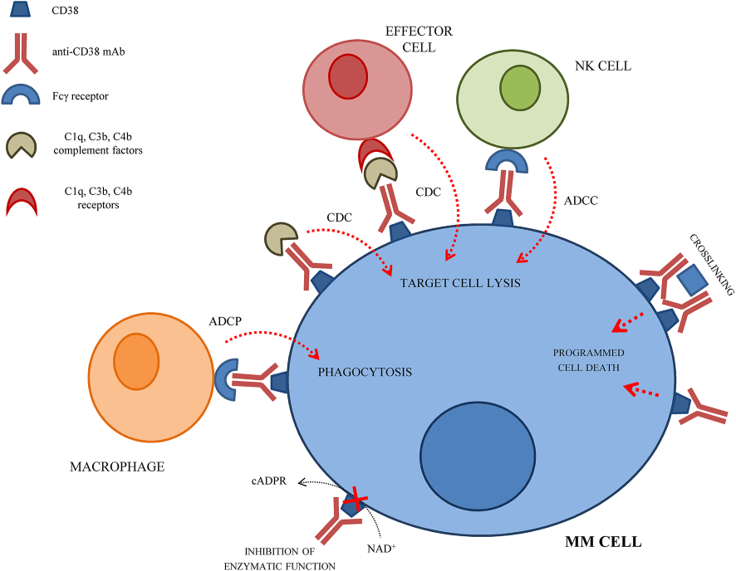
CD38, a transmembrane glycoprotein, is highly expressed on plasma cells and is expressed at low levels on myeloid cells, lymphoid cells, T lymphocytes, NK cells, monocytes, and endothelial cells.1,2 CD38 plays a role in modulation of immune cell activation, NAD+ metabolism, cell-cell adhesion, cell migration, and signaling events including calcium signaling.2 Plasma cells are the cell of origin for MM.3,4 CD38 is expressed at high levels on normal and malignant plasma cells, and at comparatively low levels on other cells. This differential expression makes it a useful therapeutic target for MM. CD38 promotes proliferation and survival in MM cells. Overexpression of CD38 is associated with an immunosuppressive bone marrow microenvironment. CD38 is a well-established target in R/R MM.
CD38 in MM5
DEVELOPMENT
ABBV-438 is being investigated in a Phase 1 trial for the treatment of R/R multiple myeloma.
CLINICAL TRIALS
View select clinical trials with ABBV-438 now. To view a full list of clinical trials in which ABBV-438 is being investigated, please visit ClinicalTrials.gov.
References
- Bisht K, et al. Cancer Med. 2023 Oct;12(20):20332-20352.
- van de Donk NWCJ, et al. Front Immunol. 2018 Sep 20;9:2134.
- Cho SF, et al. Frontiers in immunology. 2018 Aug 10;9:1821.
- Gozzetti A, et al. Hum Vaccin Immunother. 2022 Nov 30;18(5):2052658.
- Morandi F, et al. Front. Immunol. 9:2722. 2018.

Multiple Myeloma

OVERVIEW
SIM-0500 is an investigational drug under clinical development. Safety and efficacy have not been established.
SIM-0500 developed by Simcere Zaiming. Abbvie holds an exclusive option to develop and commercialize SIM-0500.

Multiple Myeloma

OVERVIEW
UB-VV111 is an investigational drug under clinical development. Safety and efficacy have not been established.
UB-VV111 developed by Umoja Biopharma. AbbVie holds an exclusive option to develop and commercialize UB-VV111.

Chronic Lymphocytic Leukemia (CLL)
Large B-Cell Lymphoma


OVERVIEW
ABBV-711 is an investigational drug under clinical development. Safety and efficacy have not been established.
DEVELOPMENT
ABBV-711 is being investigated in a Phase 1 First-in-Human trial for the treatment of advanced squamous tumors.
CLINICAL TRIALS
View select clinical trials with ABBV-711 now. To view a full list of clinical trials in which ABBV-711 is being investigated, please visit ClinicalTrials.gov.

Advanced Squamous Tumors